
Wasp nests are a common issue throughout Gloucester, the Cotswolds and the UK. That’s because wasps are highly protective of their nests, and may use their painful stings to protect them, which can cause pain, discomfort, and allergic reactions in some people.
As a leading provider of wasp nest removal services throughout Gloucester, Gloucestershire and beyond, Arrest The Pest understands how to identify a wasp nest and what to do if you find one, so keep reading to learn more.
Common Types Of Wasp Nests
Most wasp species in the UK are solitary wasps, meaning they mostly live alone, and build nests underground.
As such, these wasps are usually not an issue for most people, and cause limited disruption. The issue comes from social wasp nests. Social wasp species, such as common wasps, German wasps and others, build large nests with distinctive papery walls.
What makes these social wasp nests dangerous is that the entire colony, with the exception of the queen wasp, enters and leaves throughout the day. As such, it can be hard to carry out wasp nest removal without disturbing the wasps.
Worker wasps will aim to protect the queen and the nest, so they may sting. Wasp stings can be painful and cause skin irritation, but if you are allergic to wasp saliva they can also cause anaphylactic shock.
If you see wasps flying in and out of the nest, then this is a sign of an active wasp nest. You may also notice old nests, as wasps only use their nest once.
Each year in the winter, the worker wasps die off, and the queen wasp hibernates until the spring, when she builds a new nest nearby.
As such, you may notice active and old wasp nests, both of which need to be removed, as empty nests can be used by other insect pests.
Wasp Nest Identification
The appearance of a wasp nest depends on the species you’re dealing with. Paper wasp nests, for example, often have the hexagonal cells on the outside, with no outer shell like common wasp nests have.
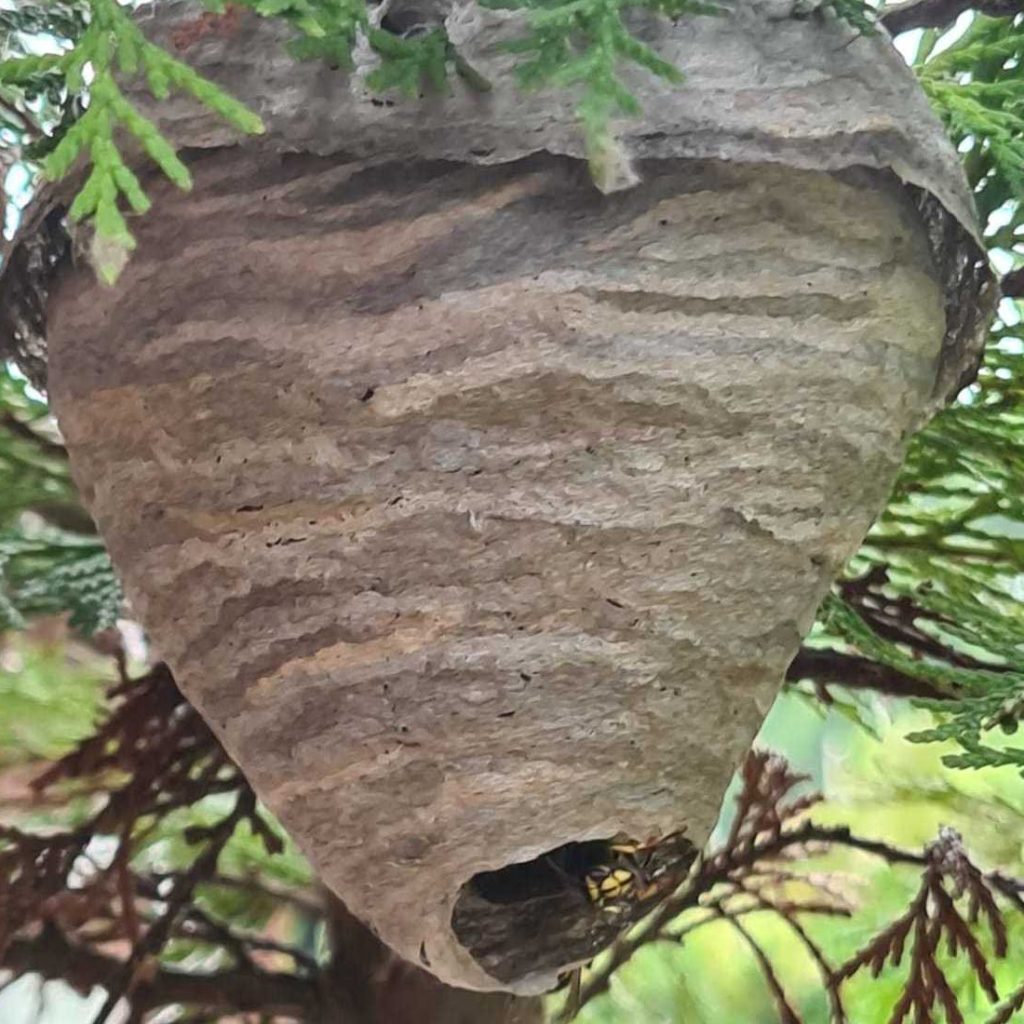
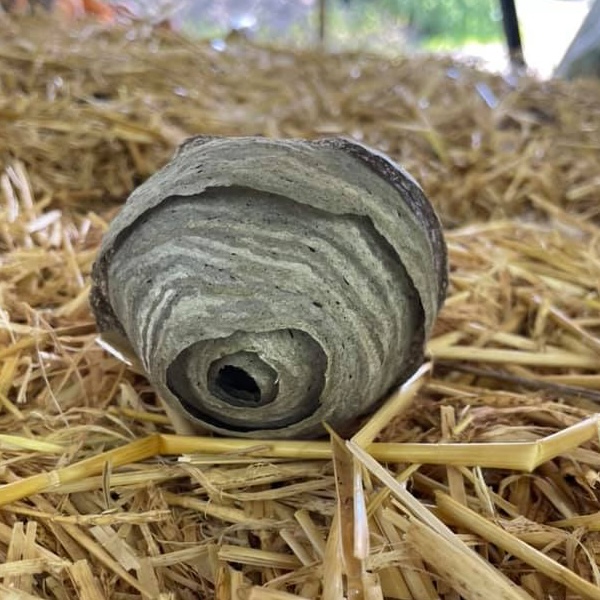
Common and German wasp nests usually have a swirled grey outer layer, and are usually oval in shape. They can range from the size of a golf ball to a basketball, or even larger. In some cases, wasp nests expand to fill a certain space, such as roof eaves.
Because they are made from chewed wood pulp, most wasp nests are grey or light brown in colour, and you may find them anywhere from hanging from tree branches to inside bins, bird boxes and other containers.
Areas To Inspect If You Think You Have A Wasp Nest
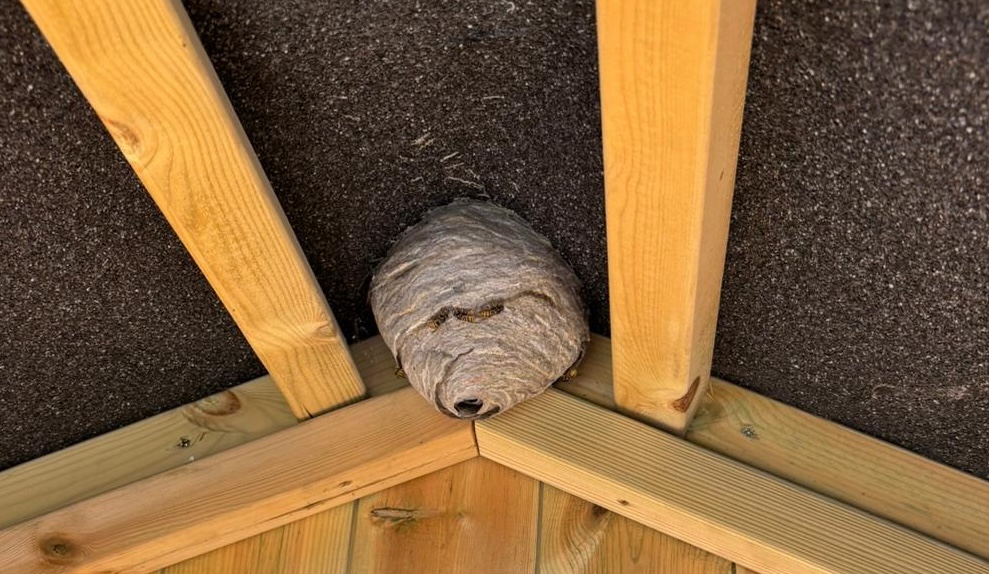
Wasp nests are commonly found in tight spaces, such as hanging from roof beams or even inside structures such as bird boxes.
Ground nesting wasp species use abandoned rodent burrows, but social wasps usually build their nests on tree branches or other high spaces.
As such, you should look for wasp nests in areas such as roofs, sheds and other raised, sheltered spots. In some cases, wasps can build nests inside wall cavities and chimneys, in which case you need to look for entry points.
If you see wasps flying in and out from a small opening in your cavity walls, this could indicate a nest is inside.
The Difference Between Wasp And Bee Nests
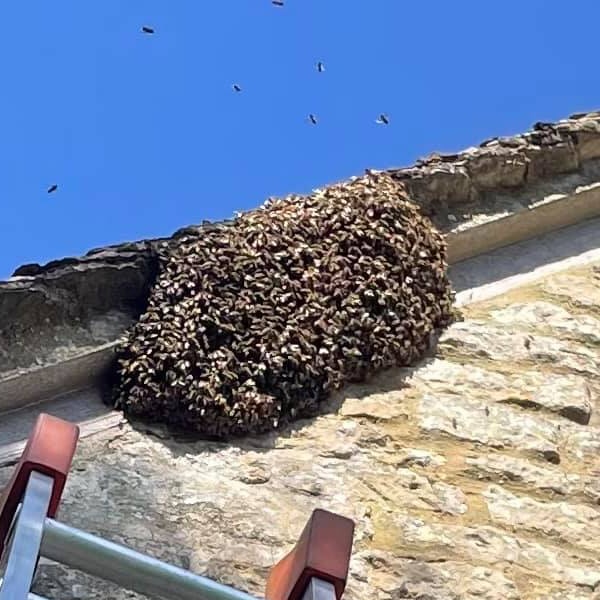
In many cases, wasps can be mistaken for bees or hornets. In particular, wasps are often mistaken for honey bees, as they both have the distinctive cinched middle section that gives them the appearance of a waist.
Bee nests are made from wax, rather than wood pulp, so they are often wetter than wasp nests, and the hexagonal cells are usually visible from the outside, if they aren’t covered in a swarm of bees.
Wasp nests can also be mistaken for hornet nests in many cases. Hornets are technically a type of wasp, but hornet nests are often bigger than even large wasp nests, and hornets usually build more aerial nests high up in trees.
Thankfully, Arrest The Pest offers a full pest control service that includes hornet nest removal and bee relocation, so we can help remove all insect pests quickly and effectively from properties throughout Gloucester.
The Difference Between Wasp And Bee Nests
If you find a wasp nest on your property, or aren’t sure if it’s a wasp, hornet or bee nest, then the best thing to do is call in a local professional pest control provider like Arrest The Pest.
Our team can identify the species and provide expert advice. If the issue is bees, we work with beekeepers throughout Gloucester who can remove the bees and relocate them to a local hive.
For hornets and wasps, we can carry out safe removal of old and active wasp nests, reducing your risk of stings and structural damage to your property.
As well as wasps, bees and hornets, we also offer removal for other pests, including rats, mice, squirrels, fleas, cockroach, ants and even nuisance birds.
If you’ve found signs of a wasp nest or other wasp activity, contact us on 07766083234 to book expert wasp nest removal from your Gloucester home or business premises.